

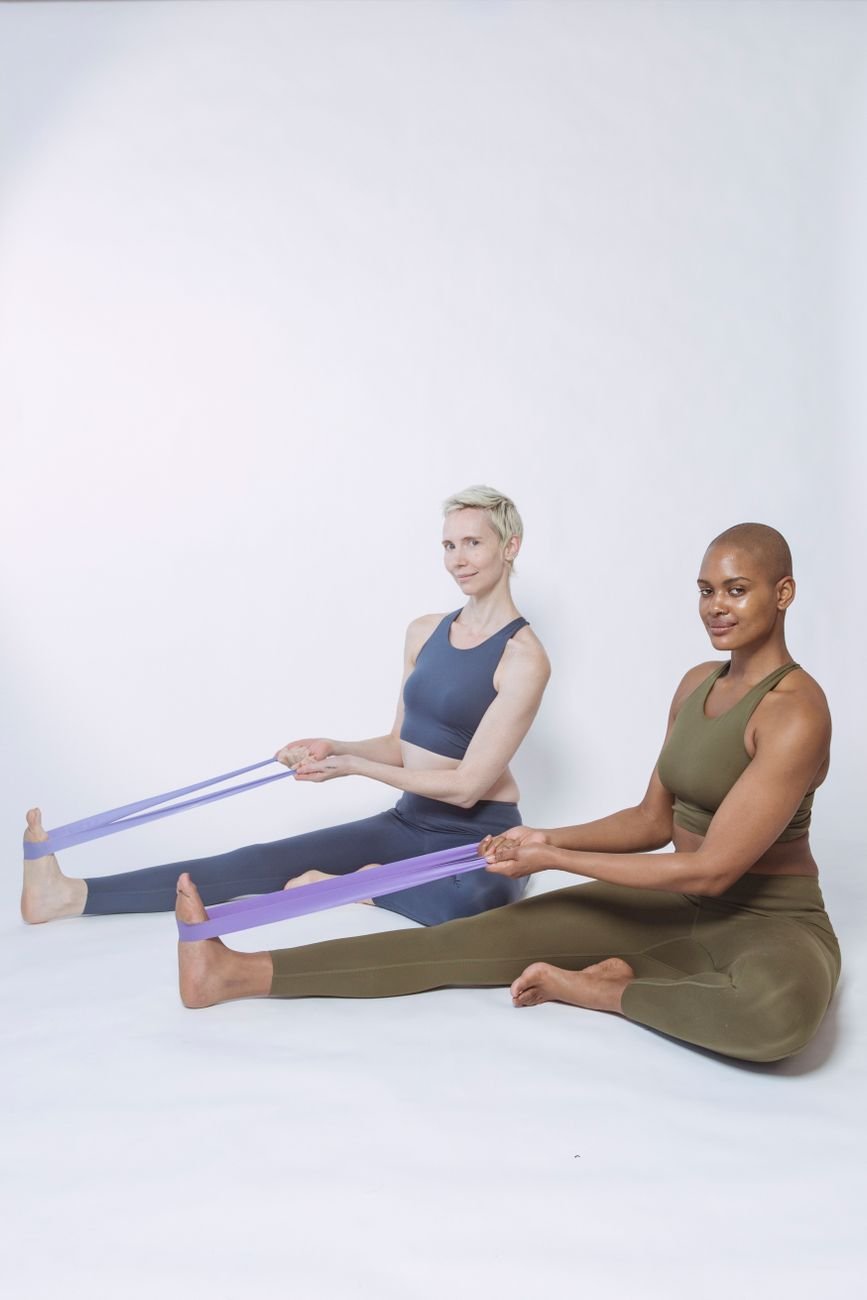
Resistance training forms the foundation of lifelong physical resilience, metabolic health, and structural integrity. For individuals stepping into the world of fitness, the array of heavy iron weights, complex machines, and intimidating gym environments can create unnecessary barriers to entry. This is where beginner resistance band exercises for full body strength offer a practical, highly adaptable, and scientifically validated alternative. Portable, inexpensive, and remarkably versatile, resistance bands provide variable tension that matches the natural strength curve of human joints, reducing shear stress while maximizing muscle recruitment.
Exercise physiologists and physical therapists routinely advocate for elastic resistance training due to its unique capacity to engage stabilizer muscles without placing excessive loads on the spine and connective tissues. Whether the goal is to counteract the postural degradation associated with sedentary office work, recover from an injury, or build foundational muscle tone, elastic bands deliver measurable physiological adaptations. Understanding how to select the right equipment, master fundamental movement patterns, and structure a balanced routine empowers individuals to achieve sustainable fitness milestones from the comfort of any location.
The Science of Elastic Resistance and Muscle Activation
The primary advantage of training with elastic bands lies in progressive variable resistance. Unlike traditional dumbbells or barbell plates, which exert a constant gravitational load regardless of the joint angle, resistance bands increase tension as the material stretches. This mechanical property aligns closely with human strength curves, where muscles are typically stronger at the fully extended or contracted portion of a movement and weaker at the midpoint. Research published in the Journal of Strength and Conditioning Research indicates that elastic resistance elicits levels of electromyographic (EMG) muscle activation comparable to conventional free weights across major muscle groups.
Furthermore, bands require constant stabilization. Because the material pulls back toward a central anchor point or midpoint, stabilizing muscles in the core, shoulders, and hips must activate continuously to control the trajectory of the movement. This constant tension eliminates momentum, forcing the target musculature to perform the work rather than relying on physics to carry the load through a dead zone. For novices, this neuromuscular feedback loop accelerates kinesthetic awareness, teaching proper joint alignment and movement mechanics before heavier loads are introduced.
Choosing the Right Equipment for Your Strength Journey
Selecting appropriate equipment is the critical first step before initiating any structured routine. Resistance bands are manufactured in several distinct styles, each serving specific biomechanical functions. Understanding these variations ensures safety, comfort, and progression.
Loop Bands
Loop bands are continuous circular bands of rubber or latex, frequently used for lower body activation, lateral leg walks, and upper body stabilization. They are categorized by thickness and width, which directly correlate with the resistance level. When placed around the thighs or ankles, loop bands force the gluteus medius and minimus to work overtime, correcting knee valgus and strengthening the hip complex.
Tube Bands with Handles
Tube bands closely mimic the functionality of cable machines found in commercial fitness facilities. Typically featuring foam handles and a door anchor, these bands are exceptionally well-suited for pushing and pulling movements such as chest presses, rows, and bicep curls. The handles provide a secure grip, preventing the friction burns or rolling sensations sometimes experienced with flat latex bands.
Therapy Flat Bands
Therapy bands are long, flat sheets of latex or latex-free elastomer without handles or loops. Historically utilized in clinical rehabilitation settings, these bands are pliable and allow users to wrap the material around their hands to customize grip length and tension. They are ideal for gentle joint mobilizations, upper back postural corrections, and low-impact stretching routines.
Essential Movement Patterns for Full-Body Development
A comprehensive strength routine must address multiple movement planes and target the entire muscular system. Organizing workouts around fundamental movement patterns—squatting, hinging, pushing, pulling, and core stabilization—ensures balanced development and prevents overuse injuries.
Lower Body: The Banded Squat
The squat is the king of lower body movements, simultaneously engaging the quadriceps, hamstrings, glutes, and core.
- Stand with both feet placed firmly on the center of a flat or tube band, positioning feet shoulder-width apart.
- Hold the handles or the top of the band at shoulder height, elbows pointed forward or slightly down.
- Initiate the movement by pushing the hips backward and bending the knees, maintaining a neutral spine and keeping the chest lifted.
- Lower until the thighs are parallel to the floor, ensuring the knees track directly over the toes.
- Drive through the heels and squeeze the glutes to return to the starting upright position.
Upper Body Push: The Anchored Chest Press
Developing pushing strength involves the pectorals, anterior deltoids, and triceps, mimicking horizontal pushing mechanics.
- Secure a tube band around a sturdy door anchor at chest height or wrap a long band around a vertical post behind the body.
- Step forward with handles in each hand until there is moderate tension in the band.
- Position feet in a staggered stance for stability and keep the core braced.
- Press the handles forward and slightly inward until the arms are fully extended without locking the elbows.
- Slowly control the return of the handles toward the chest to maximize eccentric muscle loading.
Upper Body Pull: The Seated or Standing Row
Pulling movements counteract the forward-rounded posture prevalent in modern desk-bound lifestyles, strengthening the rhomboids, latissimus dorsi, and rear deltoids.
- Sit on the floor with legs extended forward, looping the center of the band securely around the arches of the feet.
- Hold the handles with a neutral grip, sitting tall with an elongated spine.
- Pull the elbows backward past the torso, squeezing the shoulder blades together at the peak of the contraction.
- Pause briefly before slowly returning the arms to the front starting position while maintaining posture.
Comparison of Resistance Band Types
| Band Type | Primary Use Cases | Advantages | Limitations |
|---|---|---|---|
| Loop Bands | Lower body conditioning, lateral mobility, hip stabilization | Compact, highly durable, excellent for multi-directional movement | Limited upper body pulling options without handles |
| Tube Bands with Handles | Pressing, pulling, curls, overhead movements | Comfortable grips, versatile anchor options, mimics cable machines | Bulkier to transport, rubber tubing can wear over time |
| Flat Therapy Bands | Rehabilitation, stretching, light upper body therapy | Highly customizable tension, inexpensive, gentle on joints | Prone to tearing if nicked, lacks secure handles |
Designing a Balanced Weekly Routine
Consistency and progressive overload drive physiological adaptation. For beginners, training the full body three days per week with at least one rest day between sessions provides an optimal balance of stimulus and recovery.
Each session should begin with a five-minute dynamic warm-up consisting of light calisthenics, arm circles, and gentle band pull-aparts to lubricate the joints and elevate core body temperature. Following the warm-up, perform one exercise from each major movement category, completing two to three sets of 10 to 15 repetitions per exercise. Rest for 60 to 90 seconds between sets to allow adenosine triphosphate (ATP) stores to replenish within the muscle tissue.
Progression with resistance bands differs from traditional iron weights. Because adding external plates is not an option, exercisers progress by shortening the working length of the band, stepping wider on the band to increase initial tension, upgrading to a thicker band category, or slowing down the eccentric phase of the movement to increase time under tension.
Common Mistakes to Avoid
Maximizing the efficacy of resistance training requires strict attention to form and equipment maintenance. Neglecting these details can limit progress or lead to unnecessary strain.
- Failing to Inspect Equipment: Always check bands for microscopic tears, cracks, or thinning areas before use. A snapping band under high tension can cause severe skin welts or eye injury.
- Using Insufficient Anchor Points: Never anchor a band to a door handle that opens toward the user, and ensure doors are locked or clearly marked when using a door anchor.
- Relying on Momentum: Snapping back and forth during repetitions utilizes momentum rather than muscular contraction. Controlled, deliberate tempos yield superior strength gains.
- Compromising Spinal Alignment: Rounding the lower back during squats or hinging movements transfers load from the musculature to the lumbar discs. Maintain a neutral spine throughout every repetition.
Frequently Asked Questions
Can resistance bands build as much muscle as dumbbells?
Yes, for beginners and intermediate trainees, resistance bands can stimulate hypertrophy effectively. Muscle growth responds to mechanical tension and metabolic stress, both of which are generated efficiently by elastic resistance when performed to near-failure.
How often should resistance bands be replaced?
Depending on frequency of use and environmental storage conditions such as exposure to direct sunlight or extreme temperatures, resistance bands typically last between 12 to 24 months. Inspect them regularly for surface cracking or stickiness.
Are resistance bands safe for individuals with joint pain?
Elastic bands are frequently prescribed in physical therapy precisely because they are gentle on joints. The variable resistance profile reduces the abrupt impact forces often experienced at joint lockouts with heavy free weights.
Can I combine resistance bands with bodyweight exercises?
Combining bands with calisthenics, such as adding a band to push-ups or bodyweight squats, is an excellent method to increase difficulty without purchasing heavy gym equipment.
Conclusion
Embarking on a strength-building journey does not require expensive gym memberships or complex machinery. Beginner resistance band exercises for full body strength offer a scientifically grounded, accessible, and highly effective pathway to physical vitality. By selecting the appropriate equipment, prioritizing correct movement mechanics, and applying consistent progressive overload, individuals can build functional strength, enhance joint stability, and improve overall body composition. Consistency remains the ultimate driver of physiological change; establishing a sustainable routine with elastic bands lays a robust foundation for lifelong health and wellness.
Featured Image Credit: Generated/Sourced via Unsplash.
Disclaimer: This article is AI-generated for informational and educational purposes. While we strive to provide high-quality context and authority, the content should not be used as professional advice. The author/website assumes no liability for external links or factual omissions.