

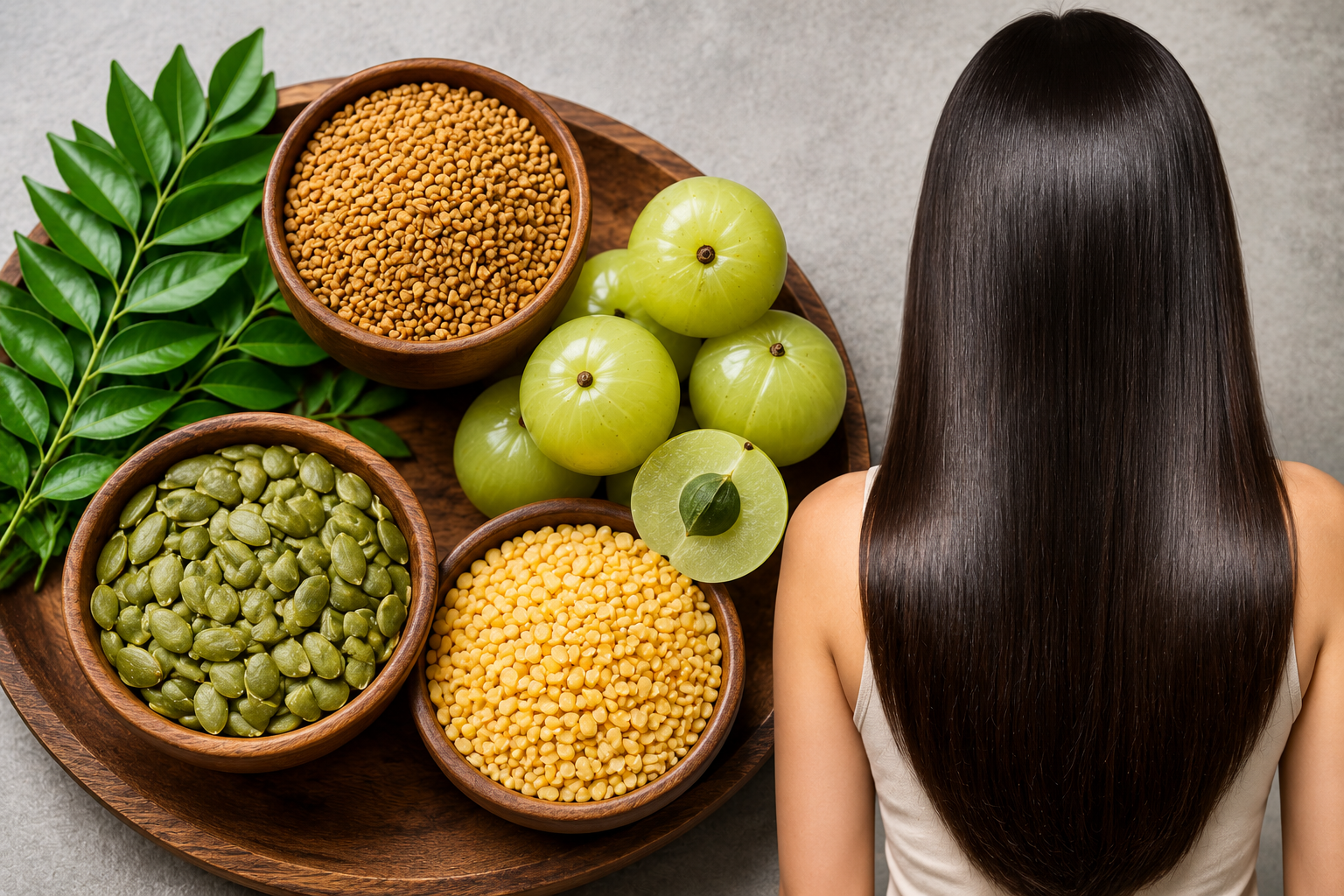
Hello friends, often when people meet, they say their hair is falling out a lot, getting thin, and the scalp is becoming visible. When you talk to them, you find out they’ve tried all sorts of expensive shampoos, serums, and hair growth oils. But when you ask them what they eat, they go silent. Friends, for your hair to grow long, thick, and full, it’s really important that your hair gets the right raw materials, and those come from your diet.
So, in this article, I want to share five foods that provide your hair with the nutrients it needs so your hair follicles become stronger again. As a result, hair fall starts reducing, and your hair begins growing faster and healthier.
Now, you don’t have to eat all five foods every day. Each one works like a natural supplement for your hair. Even adding just one of them consistently to your diet can make a noticeable difference within a few weeks. So, choose whichever foods suit your lifestyle and include them regularly.
Backed by both modern science and Ayurveda, these simple foods can help nourish your hair from within. Let’s begin.
Why Does Hair Fall Happen?
Hair fall doesn’t happen overnight. In most cases, there are a few common reasons behind it.
1. Nutrient Deficiency
Today, many people eat enough calories but very few nutrients. When the body doesn’t receive enough vitamins, minerals, and protein, it prioritizes vital organs such as the heart, liver, and kidneys. Hair is considered non-essential, so the body reduces nutrients to the hair follicles first, leading to weak, thin, and falling hair.
2. Chronic Stress
Long-term stress increases cortisol levels in the body. High cortisol pushes hair follicles into their resting phase, slowing down the natural hair growth cycle and increasing hair shedding.
3. Iron Deficiency
Iron deficiency is very common, especially among Indians. Since iron carries oxygen throughout the body, low iron levels mean less oxygen reaches the hair follicles. Without enough oxygen, the follicles produce weaker and thinner hair.
4. Seasonal Changes
Many people notice increased hair fall during the rainy season or seasonal transitions. Weather changes, humidity, and scalp infections can all contribute to temporary hair shedding.
Other factors like DHT (dihydrotestosterone), protein deficiency, poor gut health, and hormonal imbalance can also contribute to hair loss. Fortunately, many of these causes can be improved with proper nutrition.
1. Curry Leaves
Curry leaves are one of the best natural foods for reducing hair fall.
Unlike many other plant foods, curry leaves contain both iron and copper, two minerals essential for healthy hair growth. They are also rich in beta-carotene, B vitamins, and powerful antioxidants that protect hair follicles from damage.
Ayurveda also considers curry leaves highly beneficial for balancing Pitta dosha, which is often associated with premature hair fall.
How to eat them
- Chew 4-5 fresh curry leaves every morning.
- Add them generously while making poha.
- Mix them into parathas or chapati dough.
- Use them in dal, rice, vegetable dishes, or chutneys.
- Add curry leaves while tempering vegetables and lentils.
Consistent use may gradually reduce hair fall while improving hair strength.
2. Fenugreek Seeds (Methi)
Fenugreek seeds contain a natural compound called diosgenin, which has been studied for promoting hair growth.
They also possess antifungal properties that help reduce scalp inflammation caused by fungal overgrowth.
Fenugreek contains vitamin B3 (nicotinic acid), which improves blood circulation to the scalp, allowing nutrients like iron, zinc, and amino acids to reach hair follicles more efficiently.
How to use
- Soak one tablespoon of fenugreek seeds overnight.
- Eat the soaked seeds the next morning.
- Drink the soaking water as well.
- Wait about 30 minutes before breakfast.
Regular use over several weeks may help improve hair thickness and reduce hair shedding.
3. Amla (Indian Gooseberry)
If there is one food that deserves to be called a hair superfood, it is amla.
Research suggests that compounds found in amla may help reduce the effects of DHT, one of the hormones responsible for pattern hair loss.
Amla is also one of the richest natural sources of vitamin C, which helps:
- Improve iron absorption.
- Boost collagen production.
- Protect hair follicles from oxidative damage.
It also contains gallic acid and ellagic acid, two antioxidants that help maintain a healthier scalp.
Ways to eat amla
- Eat fresh amla.
- Boil it and eat it like a pickle.
- Blend it into fresh juice.
- Use amla rasayan with honey before bedtime if fresh amla isn’t available.
4. Pumpkin Seeds
Pumpkin seeds are among the best foods for supporting healthy hair.
Research has shown that pumpkin seed oil may improve hair growth in people experiencing pattern hair loss.
Pumpkin seeds contain:
- Zinc
- Iron
- Healthy fats
- Phytosterols
- Delta-7 sterols
These compounds may help reduce the activity of DHT while supplying minerals needed for healthy hair follicles.
Important
Avoid eating raw pumpkin seeds regularly because they contain phytic acid, which can reduce mineral absorption.
Instead:
- Roast them lightly.
- Or soak them before eating.
One spoonful makes an excellent evening snack.
5. Moong Dal
Moong dal helps tackle three major causes of hair fall:
- Protein deficiency
- Iron deficiency
- Poor digestion
Hair is made primarily of keratin, a protein. Without enough dietary protein, healthy hair growth becomes difficult.
Moong dal also provides:
- Iron
- Zinc
- Magnesium
- Copper
- Folate
- Lysine
Lysine is particularly important because it improves iron absorption, allowing more oxygen to reach hair follicles.
Ways to include moong dal
- Moong dal curry
- Moong dal soup
- Moong sprouts
- Moong dal cheela
- Khichdi
- Mixed vegetable dal
Its easy digestibility makes it suitable for regular consumption.
Sample Daily Routine
A simple daily routine could look like this:
- Morning: 4-5 fresh curry leaves.
- Breakfast: Poha with yogurt or moong dal cheela.
- Lunch: Rajma, chole, or dal with vegetables and buttermilk.
- Evening Snack: Roasted pumpkin seeds or soaked fenugreek seeds.
- Dinner: Moong dal with vegetables.
- Before Bed: Amla or amla rasayan with honey.
Final Thoughts
Before spending money on expensive shampoos, serums, supplements, or hair oils, take a close look at your diet. Hair needs protein, iron, zinc, vitamins, and healthy fats to grow. When your body receives these nutrients consistently, your hair follicles become stronger, hair fall begins to reduce, and healthier hair growth becomes possible.
While results vary from person to person, following a nutrient-rich diet consistently for several weeks is far more effective than relying only on external hair products. Patience and consistency are the keys to healthier, stronger hair.