

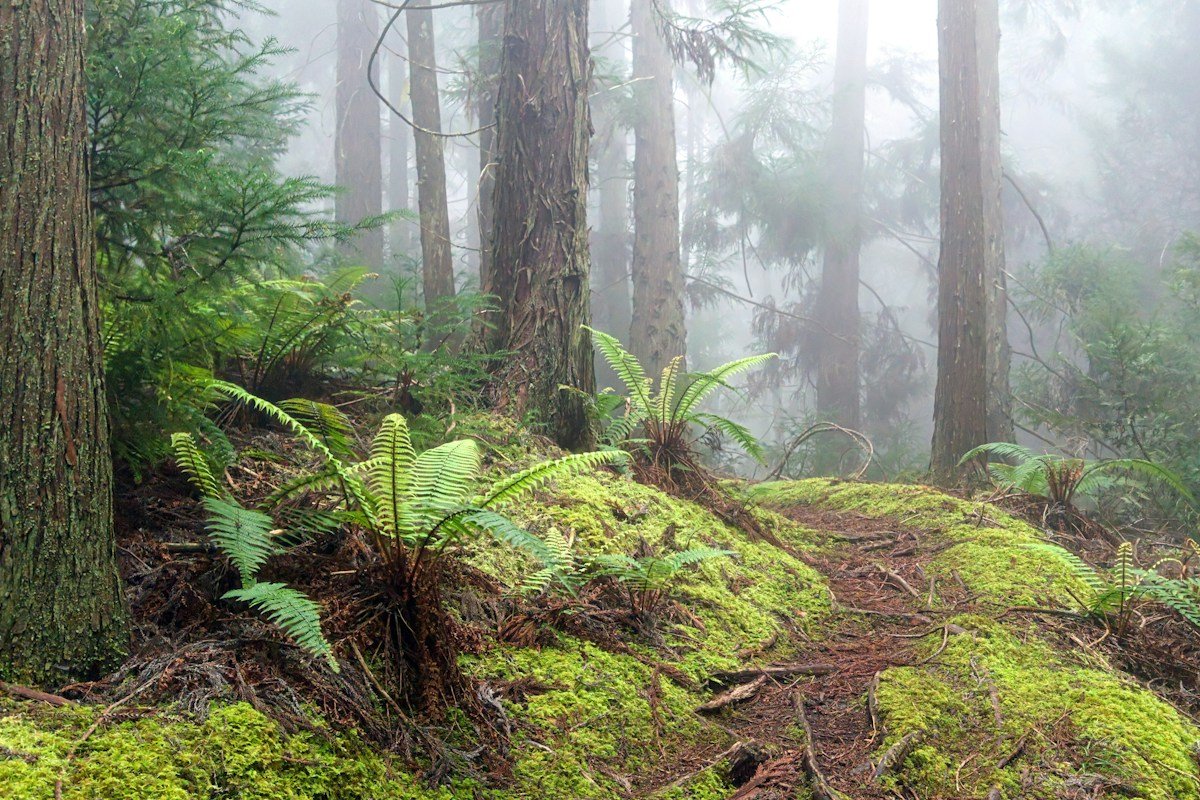
Shinrin-yoku, the Japanese practice of forest bathing, represents one of the most beautifully simple and scientifically well-validated wellness practices to have gained global recognition in recent decades. The term, literally translated as “taking in the forest atmosphere” or “forest bathing,” was coined by the Japanese Ministry of Agriculture, Forestry, and Fisheries in 1982 and subsequently became the subject of substantial scientific research through the work of Dr. Qing Li and colleagues at Nippon Medical School in Tokyo, whose studies on the physiological and psychological effects of forest environments have been published in peer-reviewed journals and summarized in Li’s accessible book on the subject.
Forest bathing does not involve exercise, hiking in any performance sense, or any specific activity. It simply involves being in a forest environment, moving slowly, breathing deeply, engaging all the senses with the environment, and allowing the distinctive qualities of forest atmosphere to interact with the body and mind. The practice invites presence rather than achievement, sensory engagement rather than distraction, and slow movement rather than purposeful exercise, offering a mode of nature engagement that is distinct from fitness-oriented outdoor activity.
India’s extraordinary biodiversity includes vast forest reserves, national parks, and natural areas across every region, from the Himalayan foothills to the Western Ghats, the forests of Madhya Pradesh to the mangroves of the Sundarbans. Even within cities, gardens, parks, and tree-lined areas can provide partial access to the benefits of green space exposure, making shinrin-yoku principles applicable across very different geographic and urban contexts.
Phytoncides: The Chemical Basis of Forest Healing
One of the most remarkable aspects of the shinrin-yoku research is the identification of a specific chemical mechanism underlying some of its documented health benefits. Trees, particularly conifers including cedar, cypress, and pine, release biologically active volatile compounds called phytoncides as part of their immune system, used by the tree to protect against pathogens, insects, and environmental stressors. These compounds, including alpha-pinene, beta-pinene, limonene, and others, are released into the forest atmosphere and inhaled by individuals spending time in the environment.
Dr. Li’s research demonstrated that exposure to phytoncides, whether through actual forest time or through controlled laboratory exposure to cedar wood essential oil diffusion, increased the activity of natural killer (NK) cells, the immune cells responsible for identifying and eliminating cancer cells and virally infected cells. In a landmark 2009 study, male business professionals who spent three days and two nights in a forest showed a 50 percent increase in NK cell activity immediately after the trip, with this enhancement persisting for 30 days after return. A day trip to a forest produced smaller but measurable NK cell enhancement lasting 7 days.
This finding was remarkable both for the magnitude of the immune effect and for its duration. No pharmaceutical intervention produces lasting NK cell enhancement of this magnitude from brief exposures. The mechanism appears to involve both phytoncide inhalation and the stress reduction that forest environments produce, as stress hormones including cortisol suppress NK cell activity and their reduction through forest relaxation removes this immune suppression.
Stress Hormone Reduction in Forest Environments
Multiple studies have measured salivary cortisol, urinary adrenaline, and noradrenaline levels before and after time spent in forest versus urban environments. Consistently, forest time produces significantly greater reductions in these stress hormones than equivalent time spent in urban environments, even when activity level is controlled. Dr. Li’s research found that forest walks produced approximately 12.4 percent lower cortisol levels and significantly reduced sympathetic nervous system activity compared to urban walks of equal duration and effort level.
The specific qualities of forest environments that produce this stress hormone reduction include multiple sensory elements that interact with the nervous system. The fractal patterns of natural structures including leaves, branches, and water create visual information that eye-tracking research has shown to produce measurable physical relaxation compared to the angular, non-fractal geometry of urban built environments. Natural sounds including birdsong, water, and wind in trees activate the parasympathetic nervous system and have been shown to accelerate recovery from physiological stress states. The reduced noise compared to urban traffic removes a chronic low-level stressor that cortisol research links to persistent sympathetic activation.
Psychological Benefits: Attention Restoration Theory
Beyond the physiological stress hormone research, Attention Restoration Theory (ART), developed by psychologists Rachel and Stephen Kaplan, provides a cognitive framework for understanding why natural environments restore mental fatigue in ways that urban environments cannot. The theory proposes that natural environments engage involuntary attention through their inherent interest and fascination, allowing the directed attention faculty that is depleted by concentrated cognitive work to recover. This attention restoration effect has been demonstrated in multiple studies showing improved cognitive performance on tasks requiring directed attention after time in natural environments.
Research from the University of Michigan found that a 50-minute walk in an arboretum improved working memory and attention scores significantly more than a 50-minute walk in an urban environment, despite equivalent physical activity. Research with children diagnosed with attention deficit hyperactivity disorder showed improved concentration after outdoor nature activities compared to indoor or urban outdoor activities, leading some researchers to propose that nature exposure may have value as a complementary approach alongside established treatments for attention difficulties.
Forest Bathing Health Benefits Evidence Matrix
The following matrix summarizes the documented health benefits of forest bathing/shinrin-yoku practice, the evidence base for each benefit, proposed mechanisms, and how Indian urban dwellers can access these benefits.
| Health Domain | Evidence Level | Mechanism | Practical Access in India |
|---|---|---|---|
| NK cell immune activity | Strong (clinical studies) | Phytoncide inhalation | Forest reserves, tree-dense parks |
| Cortisol reduction | Strong (multiple RCTs) | Parasympathetic activation | Any green-canopied park area |
| Blood pressure reduction | Strong | Stress reduction, NO release | Nature walks, garden areas |
| Attention restoration | Strong | Involuntary attention engagement | Botanical gardens, green parks |
| Mood improvement | Strong | Multiple psychological mechanisms | Any outdoor green space |
| Sleep quality | Moderate | Cortisol reduction, circadian light | Morning outdoor time in nature |
| Anti-cancer immune support | Preliminary | NK cell enhancement | Regular forest visits, monthly |
| Creativity/cognition | Moderate | Default mode network restoration | Unstructured nature time |
* Urban green spaces provide partial but real benefits even in the absence of true forest access. Quality of engagement matters as much as specific location.
Frequently Asked Questions About Forest Bathing
How is forest bathing different from hiking?
Forest bathing prioritizes presence and sensory engagement over physical achievement. There is no destination, no pace requirement, and no distance goal. While hiking often involves sustained purposeful movement toward a specific location, forest bathing involves slow movement, frequent pausing, mindful attention to the details of the environment, and deliberate sensory engagement with sounds, smells, textures, and visual elements. The research benefits of shinrin-yoku have been demonstrated with slow, meandering movement covering as little as 2 to 3 kilometers over 2 to 3 hours, distinguishing it clearly from fitness-oriented outdoor activity.
Can I get forest bathing benefits in an urban park?
Yes, partially. Research comparing urban parks with more extensive forested areas generally shows smaller but still meaningful stress hormone reductions and attention restoration effects from urban park time compared to urban streets. The presence of trees, particularly older trees with denser canopies, birdsong, reduced traffic noise, and natural visual elements provides genuine physiological benefits even without the phytoncide concentrations of dense forest environments. For urban dwellers without easy forest access, regular time in the best available green spaces provides real benefit, with occasional visits to more natural forested areas providing the fuller experience.
How long do I need to spend in a forest for benefits?
Research suggests that meaningful benefits begin with relatively short exposures. A 20-minute forest walk has been shown to produce measurable cortisol reductions and mood improvements. The most dramatic immune effects in Dr. Li’s research involved multi-day exposures, but practical daily or weekly forest time provides cumulative benefits. A minimum of 20 minutes twice weekly in any green-space environment appears sufficient to produce meaningful stress reduction benefits, with more time and more frequent visits producing correspondingly greater effects.
Are there any risks associated with forest bathing?
Forest bathing is inherently low-risk for most healthy adults. Practical considerations include awareness of local wildlife, particularly in areas with venomous snakes or insects, wearing appropriate footwear for uneven terrain, staying on established paths in unfamiliar areas to avoid getting lost, and appropriate sun protection during peak hours. People with specific plant allergies should be aware of local flora. In areas with high tick activity, checking for tick bites after forest time is prudent. The practice itself involves slow, gentle movement with no inherent physical demands that would be problematic for most people.
Can children benefit from forest bathing?
Children may actually show more pronounced benefits from natural environment time than adults, both because their developing nervous systems and immune systems are more responsive to environmental inputs and because research specifically on children in natural environments shows particularly strong effects. Studies on children with attention difficulties, anxiety, and behavioral challenges consistently show improved outcomes with regular nature time. Unstructured nature play and exploration rather than structured activities appears most beneficial, suggesting that allowing children time in natural environments without agenda or directed activity maximizes the restorative benefits that nature can provide.
Is there evidence for forest bathing in Indian research?
India has several research groups studying the health effects of green space and forest environments, though published shinrin-yoku research specifically is more limited than the Japanese and Korean literature. The Ayurvedic tradition of spending time in natural environments including forest hermitages (ashrams in forested settings) reflects ancient recognition of nature’s health-supporting properties that aligns conceptually with contemporary shinrin-yoku research. India’s exceptional biodiversity, including distinctive tropical and subtropical forest ecosystems, provides forest atmospheres with their own unique phytochemical compositions that may have distinct effects warranting specific research.
How can I practice forest bathing if I live in a city without nearby forests?
Urban forest bathing adaptations include visiting the best available green spaces, whether botanical gardens, large parks with dense tree cover, or tree-lined pathways, with intentional slow movement and sensory engagement rather than purposeful exercise pace. Amplifying nature sounds through a phone speaker when urban noise is intrusive is less ideal but provides some benefit. Incorporating houseplants into the home environment, spending time near any water features available in the city, and planning periodic day trips to the nearest forest or nature reserve for monthly fuller shinrin-yoku experiences creates a practical nature connection practice even within largely urban lives.
Do the benefits of forest bathing last after returning to the city?
Research consistently shows that benefits are not limited to the duration of forest exposure. Dr. Li’s studies found NK cell activity enhancement persisting for 7 days after a single day-trip and 30 days after a three-day forest stay. Cortisol and blood pressure improvements persist for several days after forest time. Psychological attention restoration effects appear more short-lived, resolving within a few days of returning to cognitively demanding urban environments, suggesting that frequent shorter nature exposures may provide more consistent attention restoration than infrequent longer ones for this specific benefit.
Medical Disclaimer: The information in this article is for educational and informational purposes only and is not intended as medical advice. Always consult a qualified healthcare professional before making any changes to your diet, lifestyle, or health routine. Individual results may vary.
Incorporating Forest Bathing Into Modern Indian Life
The practice of forest bathing asks for nothing more than presence, slowness, and sensory openness in a natural environment. For the growing number of Indians living in dense urban environments with limited daily nature contact, intentionally scheduling regular time in the best available natural spaces and approaching that time with the quality of attention that shinrin-yoku invites provides a genuinely valuable complement to other wellness practices. The healing properties of the natural world have been accessible throughout human history; the challenge of modern life is simply remembering to seek them out.
Further reading: WHO Physical Activity, CDC Physical Activity, NIN India, Harvard Public Health, Sleep Foundation, and PubMed.