

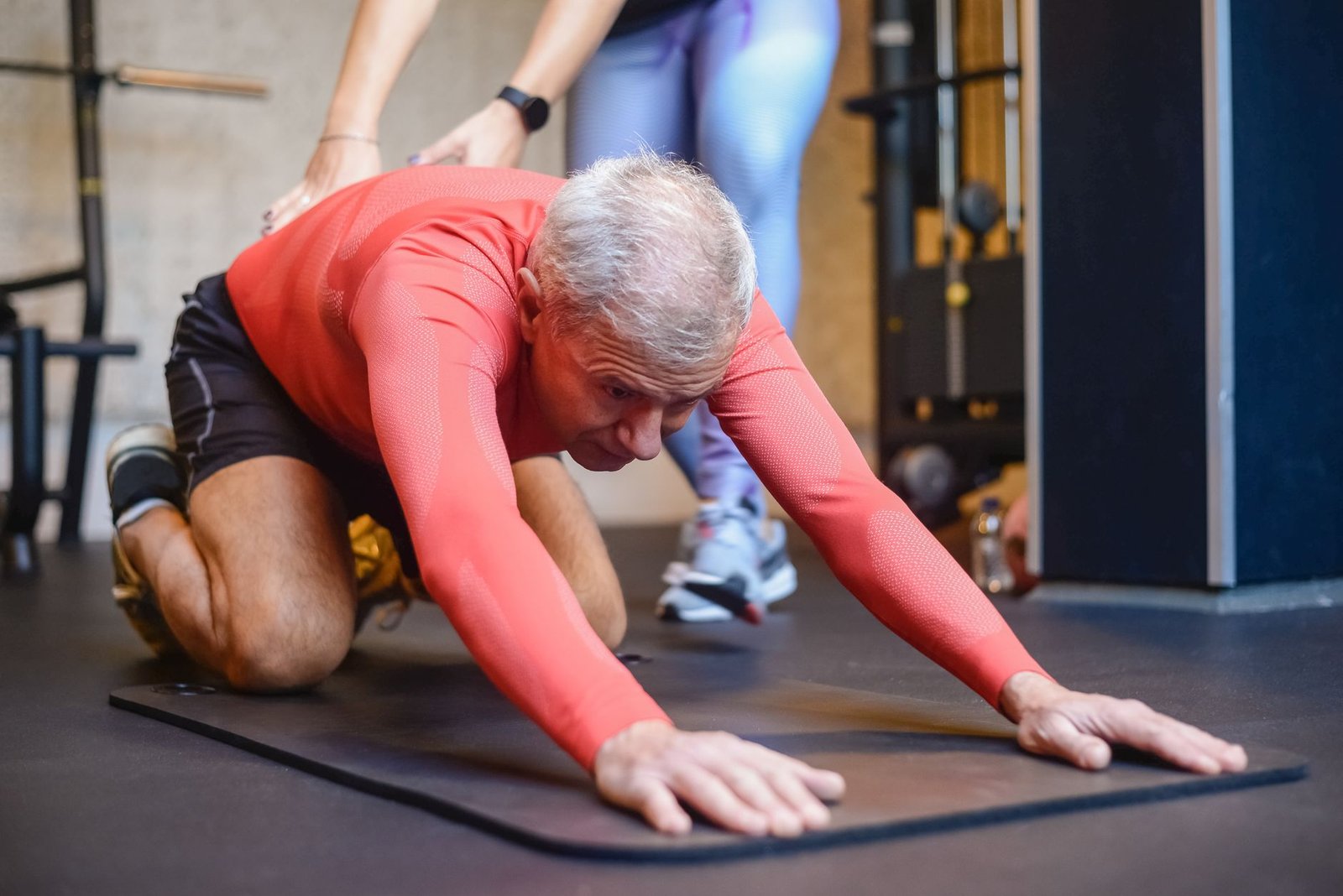
Stiffness is a universal physical experience. Whether it settles into the lower back after hours of seated desk work, grips the shoulders following a restless night, or locks the knees in place during a cold morning, joint and muscle rigidity affects how humans interact with their environment. Movement is the fundamental language of the human body, yet modern lifestyles frequently restrict this expression through prolonged physical inactivity and repetitive postures. Muscles shorten, connective tissue hardens, and synovial fluid—the natural lubricant within joints—becomes stagnant.
Addressing this physiological friction does not require intense athletic conditioning, expensive equipment, or hours spent in specialized facilities. Instead, restoring biological freedom relies on targeted, consistent mechanical inputs applied to the musculoskeletal system. Integrating simple mobility exercises for stiff muscles and joints into a daily routine recalibrates posture, enhances blood circulation, and signals the nervous system that a wider range of motion is safe to utilize. This guide explores the scientific foundations of joint health, practical movement protocols, comparative recovery strategies, and evidence-based methodologies to help individuals reclaim effortless physical function.
The Physiology of Stiffness: Why Muscles and Joints Lock Up
Understanding the biological mechanisms behind physical restriction is the first step toward effective mitigation. Muscles are composed of thousands of elastic fibers wrapped in fascial sheaths. When these fibers remain in a static position for extended periods, the surrounding fascia tends to densify and adhere to adjacent tissue layers. This adherence limits the sliding capacity of muscle fibers against one another, creating a sensation of tightness or pulling.
Concurrently, joints rely on continuous articulation to maintain optimal function. Cartilage lacks a direct blood supply and depends entirely on movement to absorb nutrients and expel metabolic waste, much like a sponge absorbing and releasing liquid. When joints remain motionless, synovial fluid thickens, leading to decreased joint lubrication and increased mechanical friction. Research highlighted by the American College of Sports Medicine demonstrates that regular, low-load movement stimulates chondrocytes—the cells responsible for cartilage maintenance—thereby preserving structural integrity and reducing joint degeneration over time.
Furthermore, the nervous system plays a vital role in regulating muscle tone. Muscle spindles and Golgi tendon organs monitor tension and length changes continuously. If the nervous system perceives instability or unfamiliar stress in a specific joint, it triggers a protective reflex, causing surrounding muscles to contract and guard the area. Introducing controlled, gentle motion reassures the central nervous system, prompting a down-regulation of protective guarding and allowing tissues to lengthen safely.
Foundational Principles for Safe Joint and Muscle Movement
Before engaging in physical routines, establishing safety parameters ensures optimal physiological adaptation without injury. Mobility work differs fundamentally from static stretching. While static stretching involves holding a muscle in an elongated position to alter its length permanently, mobility training focuses on active control through a specific range of motion, combining flexibility with muscular strength.
Consistency supersedes intensity when addressing chronic stiffness. Engaging in ten minutes of daily movement yields superior physiological benefits compared to a single, exhausting hour of activity once per week. The principle of progressive overload also applies; movements should begin within a comfortable, pain-free range. Mild muscular engagement or a gentle stretching sensation is normal, but sharp, shooting pain indicates excessive strain that requires immediate cessation.
Breathing patterns heavily influence muscular relaxation. Shallow, erratic breathing stimulates the sympathetic nervous system, often referred to as the fight-or-flight response, which inherently increases muscle tension. Conversely, diaphragmatic breathing activates the parasympathetic nervous system, promoting muscular vasodilation and tissue relaxation. Maintaining slow, rhythmic breathing during every movement pattern enhances tissue oxygenation and accelerates recovery from stiffness.
Essential Daily Mobility Routines for the Entire Body
To effectively target stiffness across different anatomical regions, a comprehensive routine must address the spine, hips, shoulders, and ankles. These four areas act as primary kinetic hubs in human locomotion.
Spinal Articulation and Thoracic Rotation
The thoracic spine, or mid-back, frequently loses mobility due to forward-leaning postures associated with reading, driving, and computer work. When the thoracic spine stiffens, the cervical spine and lumbar spine compensate by moving excessively, often resulting in neck discomfort and lower back strain.
- Cat-Cow Sequence: Begin on hands and knees with wrists aligned beneath shoulders and knees beneath hips. Inhale while dropping the abdomen toward the floor, lifting the chest and tailbone upward into spinal extension. Exhale while rounding the spine toward the ceiling, tucking the chin toward the chest and drawing the tailbone downward. Perform this movement slowly for ten repetitions, focusing on articulating each vertebra sequentially.
- Seated Thoracic Rotations: Sit upright on the edge of a stable chair with feet flat on the floor. Cross arms over the chest, placing hands on opposite shoulders. Rotate the upper torso to the right as far as comfortably possible without moving the hips or pelvis. Return to the center and rotate to the left. Complete eight controlled rotations per side to release tension along the rib cage and upper back.
Hip Openers and Pelvic Alignment
The hip complex houses some of the largest muscle groups in the human body, including the gluteals, hip flexors, and deep rotators. Prolonged sitting keeps hip flexors in a chronically shortened state, which subsequently inhibits gluteal activation and strains the lower back.
- 90/90 Hip Stretch: Sit on the floor with one leg bent at a 90-degree angle in front of the body and the other leg bent at a 90-degree angle to the side. Keeping the torso upright, hinge slightly forward over the front thigh to feel a stretch in the deep hip rotators. Hold for thirty seconds, then switch leg configurations to target the opposite hip.
- Kneeling Hip Flexor Stretch: Kneel on the right knee with the left foot placed flat on the floor in front, forming a ninety-degree angle at both knees. Engage the core and gently shift body weight forward while keeping the torso upright. A mild stretch should be felt along the front of the right hip and thigh. Hold for twenty to thirty seconds before switching sides.
Shoulder and Upper Extremity Freedom
Shoulder stiffness often originates from tightness in the pectoral muscles and weakness in the upper back stabilizers. Restoring scapular mobility ensures smooth arm movement and reduces impingement risks.
- Arm Circles: Stand with feet shoulder-width apart and arms extended straight out to the sides at shoulder height. Make small, controlled circular motions with the hands, gradually increasing the size of the circles until reaching maximum comfortable range. Perform ten circles forward, then reverse direction for ten circles backward.
- Doorway Pec Stretch: Stand within a doorway and place forearms vertically against the frame with elbows bent at ninety degrees. Step forward gently with one foot until a stretch is felt across the front of the chest and shoulders. Maintain an upright posture and hold for twenty seconds, breathing deeply.
Ankle Dorsiflexion and Foot Mobility
Ankle mobility is frequently overlooked, yet restricted ankles alter gait mechanics, placing undue stress on the knees, hips, and lower back.
- Ankle Alphabet: Sit on a chair or the floor with one leg extended. Using the big toe as a pointer, trace uppercase letters from A to Z in the air through slow, deliberate ankle rotations. Switch feet after completing the alphabet to improve multi-directional joint articulation.
- Wall-Supported Calf Stretch: Stand facing a wall, placing hands against it for support. Step one foot backward, keeping the heel flat on the floor and the back leg straight. Bend the front knee slightly forward until a stretch is felt in the calf of the back leg. Hold for thirty seconds per leg to release lower leg rigidity.
Comparing Movement Interventions for Joint Health
| Intervention Type | Primary Mechanism | Best Used For | Frequency Recommendation |
|---|---|---|---|
| Active Mobility Work | Combines joint articulation with muscular control | Daily stiffness, postural correction, warm-ups | Daily (5 to 15 minutes) |
| Static Stretching | Elongates muscle fibers via prolonged holding | Post-exercise recovery, chronic inflexibility | 3 to 4 times weekly |
| Self-Myofascial Release | Applies mechanical pressure to fascial adhesions | Tight knots, localized muscle tension | 2 to 3 times weekly |
| Low-Impact Aerobic Exercise | Increases internal body temperature and fluid circulation | General joint stiffness, systemic recovery | 4 to 5 times weekly (20-30 minutes) |
Integrating Movement Into Daily Schedules
Overcoming physical rigidity does not require dramatic lifestyle overhauls. Sustainable progress stems from micro-interventions scattered throughout the day. Individuals who work desk jobs can establish a routine of rising from their chair every forty-five minutes to perform three minutes of targeted mobility work, such as spinal rotations or hip flexor stretches.
Morning routines represent another ideal window for physical preparation. Upon waking, body temperature is slightly lower and joints have remained static for hours. Gentle, fluid movements performed before consuming morning caffeine help clear sleep-induced stiffness, stimulate lymphatic drainage, and prepare the neuromuscular system for daily demands. Evening routines can focus on calming restorative movements, signaling to the brain that the active phase of the day has concluded and facilitating deeper, more restful sleep.
Environmental cues can also support consistency. Placing a yoga mat in a visible room location, setting a smartphone reminder to adjust posture, or pairing mobility exercises with an existing daily habit—such as waiting for water to boil—creates reliable behavioral anchors that transform intentional movement into an automatic lifestyle habit.
Frequently Asked Questions
How long does it take to notice improvements in joint stiffness?
Most individuals experience immediate temporary relief following a single mobility session due to increased synovial fluid circulation and reduced nervous system guarding. Lasting structural improvements in tissue length and joint range of motion typically become noticeable within three to four weeks of consistent, daily practice.
Can mobility exercises be performed if joint pain is present?
Mild stiffness responds exceptionally well to gentle movement. However, if pain is sharp, swelling is present, or structural joint damage has been diagnosed by a medical professional, individuals should consult a physician or physical therapist before initiating any new exercise regimen to ensure safety and avoid exacerbating underlying conditions.
Is there a difference between flexibility and mobility?
Yes. Flexibility refers to the passive ability of a muscle to lengthen under external force. Mobility is a more comprehensive metric that encompasses flexibility, muscular strength, coordination, and active neurological control throughout a given joint’s full range of motion.
Do I need special equipment to practice mobility exercises?
Specialized equipment is entirely optional. The vast majority of effective routines rely exclusively on body weight, gravity, and common household items such as chairs, doorways, or flat floor surfaces.
Should mobility work be done before or after a workout?
Dynamic mobility exercises are ideal before physical activity to warm up tissues and lubricate joints. Static stretching and deep myofascial release are generally more appropriate following workouts or at the end of the day to promote muscular relaxation.
Conclusion
Physical stiffness is a natural byproduct of modern life, reflecting the human body’s remarkable ability to adapt to repetitive postures and prolonged rest. Fortunately, this physiological adaptation is reversible. By integrating simple mobility exercises for stiff muscles and joints into daily routines, individuals can systematically restore tissue elasticity, enhance joint lubrication, and improve overall functional capacity.
Consistency, patience, and attentive listening to internal biological feedback remain the cornerstones of long-term musculoskeletal health. Committing just a few minutes each day to intentional movement transforms physical capability, ensures lasting vitality, and establishes a resilient foundation for a more active, pain-free life.
Featured Image Credit: Generated/Sourced via Unsplash.
Disclaimer: This article is AI-generated for informational and educational purposes. While we strive to provide high-quality context and authority, the content should not be used as professional advice. The author/website assumes no liability for external links or factual omissions.