

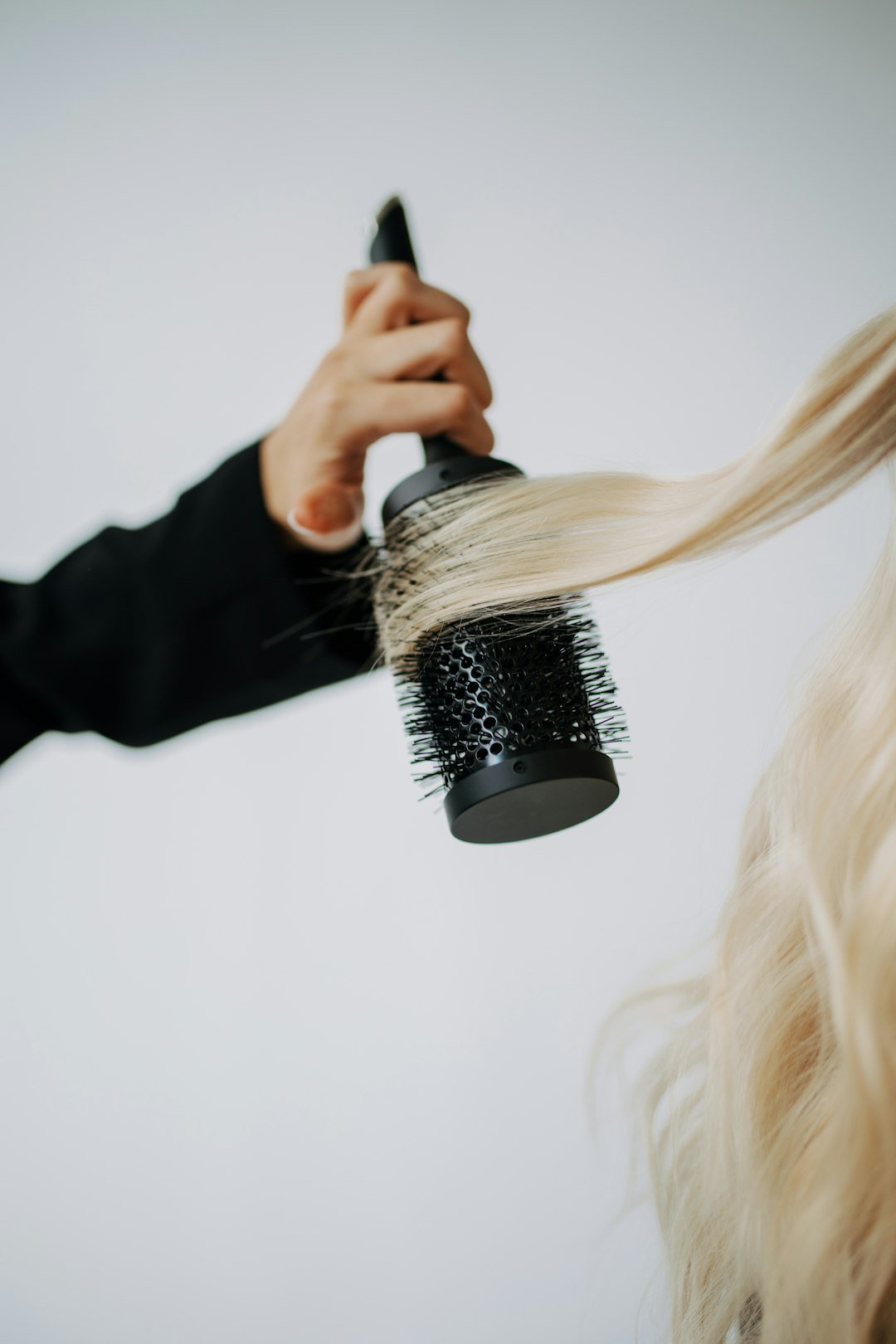
Hair styling appliances such as flat irons, curling wands, and blow dryers have become staples in modern grooming routines. Achieving sleek straight locks or voluminous curls often relies on the application of thermal energy to reshape the internal hydrogen bonds of hair strands. However, repeated exposure to high temperatures strips away essential moisture and degrades the structural protein known as keratin. Understanding how to protect hair from heat styling damage is essential for maintaining structural integrity, natural elasticity, and long-term vibrancy without completely abandoning favorite styling tools.
The Science Behind Thermal Hair Damage
To effectively manage thermal stress, examining what happens at a microscopic level during styling is necessary. Hair consists primarily of three layers: the cuticle, the cortex, and the medulla. The outermost layer, the cuticle, acts as a protective shingle-like shield. When temperatures on styling tools exceed 350 degrees Fahrenheit, the moisture trapped inside the hair shaft turns into steam. This rapid phase change creates internal pressure that causes bubbles to form within the cortex, a phenomenon documented in dermatological and trichological studies by the National Center for Biotechnology Information.
This internal trauma leads to a condition commonly referred to as bubble hair, where strands become remarkably brittle, prone to mid-shaft snapping, and completely unresponsive to standard conditioning treatments. Furthermore, the natural lipid layer that keeps strands smooth and reflective melts away under excessive heat, leaving the cuticle permanently raised. High thermal thresholds break down the disulfide bonds that give hair its strength and shape, resulting in porous, dull textures that tangle easily.
Essential Preparation Techniques Before Applying Heat
Proper preparation significantly reduces the thermal burden placed on hair fibers. Skipping the prep phase exposes unprotected proteins to immediate shock, accelerating degradation.
Choosing and Applying Thermal Protectants
Thermal protectants function as a physical and chemical barrier between the appliance and the hair shaft. These formulations typically contain silicones such as dimethicone or cyclomethicone, along with hydrolyzed wheat proteins and various copolymers. When distributed evenly through damp or dry strands, these ingredients slow down heat conduction and distribute thermal energy more uniformly across the surface. Professional guidance from the American Academy of Dermatology highlights the necessity of using a comb to ensure every strand receives an adequate coating of the protective formulation before any hot tool comes into contact with the hair.
Optimizing Moisture Balance
Dry hair absorbs heat much faster and more destructively than adequately hydrated hair. Incorporating deep conditioning treatments containing humectants like glycerin and hyaluronic acid helps maintain moisture equilibrium. Prior to any blow-drying session, gently squeezing excess water out with a microfiber towel minimizes drying time and reduces cumulative heat exposure.
Selecting the Right Tools and Temperature Settings
Not all styling appliances are manufactured with hair health in mind. Investing in high-quality equipment equipped with advanced technology minimizes unnecessary thermal stress.
- Tourmaline and Ceramic Plates: These materials emit negative ions and infrared heat, which dry and style hair from the inside out rather than scorching the outer cuticle. This ensures gentler styling at lower overall temperature settings.
- Adjustable Heat Controls: Devices lacking temperature regulation often default to excessively high settings. Fine, chemically treated, or damaged hair requires temperature thresholds under 300 degrees Fahrenheit, whereas coarse or thick textures can tolerate up to 380 degrees Fahrenheit. Exceeding 400 degrees Fahrenheit is rarely necessary and exponentially increases the risk of permanent protein denaturation, a standard guideline supported by the Trichological Society.
- Ionic Blow Dryers: These appliances break down water droplets faster through ion generation, reducing the duration of direct heat exposure on the scalp and lengths.
Comparison of Heat Styling Tools and Safety Profiles
| Tool Type | Primary Mechanism | Recommended Max Temperature | Risk Level |
|---|---|---|---|
| Ceramic Flat Iron | Conduction via smooth plates | 350°F / 175°C | Moderate |
| Titanium Styling Wand | Rapid heat transfer via metal alloy | 320°F / 160°C | High (if unmanaged) |
| Ionic Blow Dryer | Forced air combined with negative ions | N/A (Adjustable air heat) | Low to Moderate |
| Hot Air Brush | Simultaneous brushing and thermal airflow | Medium setting | Moderate |
Best Practices During the Styling Process
Execution technique plays a critical role in minimizing structural wear and tear during the styling session.
Maintaining Proper Distance and Motion
When using a blow dryer, keeping the nozzle at least six inches away from the head prevents localized overheating. Continuous movement of the appliance ensures that thermal energy does not concentrate in a single spot for too long. Pausing a flat iron on a specific section of hair for more than two seconds almost invariably results in localized breakage, a mechanical failure frequently analyzed in textile and fiber science research hosted by ResearchGate.
Sectioning for Efficiency
Attempting to style large masses of hair simultaneously forces multiple passes with hot tools. Dividing hair into four to six manageable sections allows each pass to achieve the desired result on the first attempt, drastically reducing cumulative thermal exposure.
Post-Styling Care and Repair Strategies
Once the styling session concludes, supportive maintenance helps restore balance and prevents progressive degradation over time.
Replenishing Proteins and Lipids
Routine use of bond-building treatments helps reconnect broken disulfide bonds within the cortex. Ingredients such as bis-aminopropyl diglycol dimaleate or various amino acid complexes reinforce the internal matrix. Additionally, lightweight botanical oils like argan or jojoba applied sparingly to the ends seal the cuticle and lock in hydration without weighing the hair down.
Establishing Heat-Free Recovery Periods
Allowing hair regular intervals without thermal styling encourages natural recovery. Embracing air-drying techniques or heatless styling methods—such as flexible foam rollers or braiding damp hair—gives the lipid layer time to regenerate and reduces cumulative stress cycles, aligning with recommendations from the International Journal of Trichology.
Frequently Asked Questions
Can heat damaged hair be completely repaired?
Once the internal protein structure of a hair strand suffers thermal breakdown or bubble formation, permanent structural alteration occurs. While conditioning treatments, bond-builders, and protein masks can temporarily improve manageability, smoothness, and tensile strength, severely compromised segments ultimately require trimming to restore overall hair health.
Is it safe to use hot styling tools on damp hair?
Applying a flat iron or curling wand to damp or wet hair causes moisture inside the shaft to boil instantly, creating steam bubbles that fracture the hair from within. Blow dryers are specifically designed for damp hair, but flat irons and curling wands must only be used on completely dry strands.
How often should hair be styled with heat?
Limiting thermal styling to once or twice a week significantly reduces cumulative damage. Incorporating heat-free styling alternatives on intervening days helps preserve cuticle health and maintains natural moisture levels.
Does a higher price tag on a styling tool guarantee safety?
Price does not automatically equate to absolute safety, though premium devices generally feature more accurate thermostats, superior plate materials, and even heat distribution. Monitoring the actual temperature output and using proper thermal protectants remain far more important than the brand name.
Conclusion
Protecting hair from thermal stress requires a balanced approach combining preparation, appropriate technology, careful technique, and consistent maintenance. Understanding the physiological impact of high temperatures enables informed decisions regarding tool selection and styling frequency. Prioritizing hair health through the consistent application of protective formulations, temperature regulation, and strategic recovery intervals ensures that styling routines can be enjoyed without sacrificing the strength, shine, and vitality of the hair.
Featured Image Credit: Generated/Sourced via Unsplash.
Disclaimer: This article is AI-generated for informational and educational purposes. While we strive to provide high-quality context and authority, the content should not be used as professional advice. The author/website assumes no liability for external links or factual omissions.