

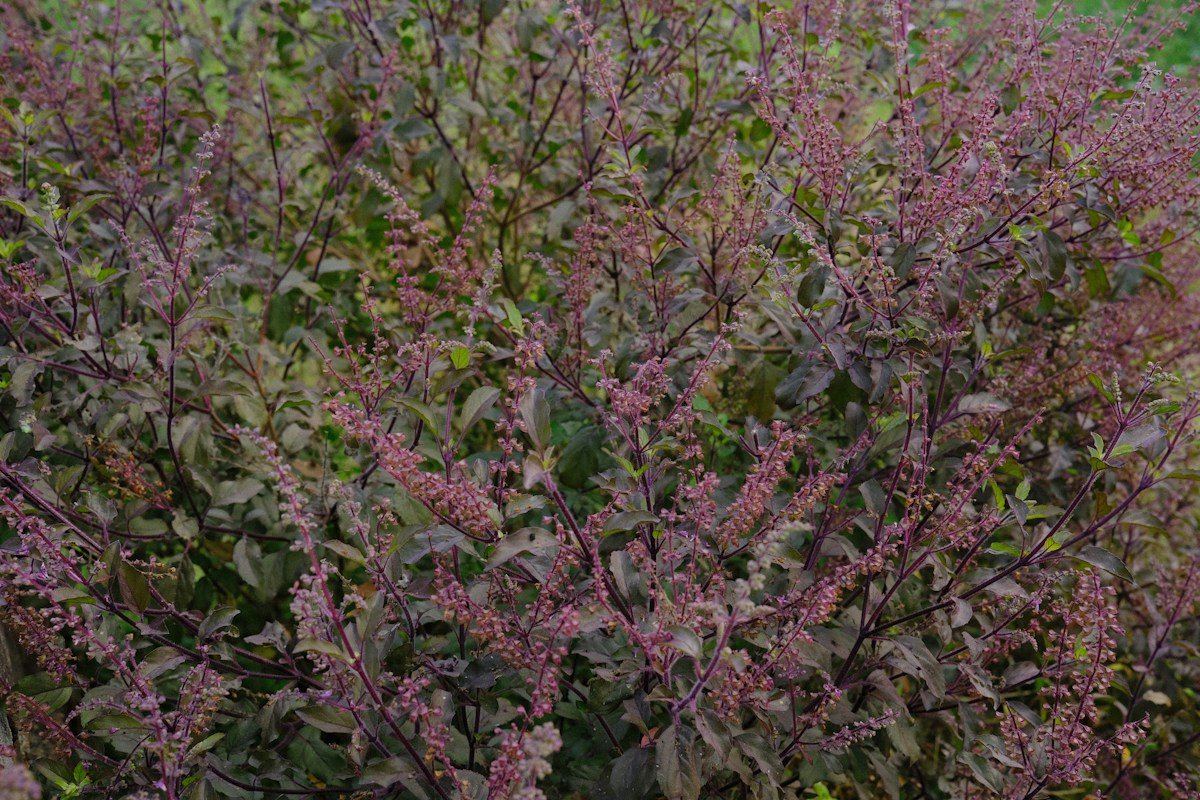
Tulsi, known botanically as Ocimum sanctum or Ocimum tenuiflorum, holds a place of extraordinary reverence in Indian culture that extends far beyond its medicinal reputation. Known as the Queen of Herbs in Ayurvedic tradition and considered sacred in Hindu religious practice, tulsi has been grown in Indian households for millennia as both a spiritual and medicinal plant. The Charaka Samhita, one of the foundational Ayurvedic texts, describes tulsi’s properties in detail, and its use in treating respiratory conditions, fevers, and infections is documented across centuries of Indian traditional medicine.
Modern pharmacological research has validated many of tulsi’s traditional applications through identification of its bioactive constituents including eugenol, ursolic acid, beta-caryophyllene, rosmarinic acid, and various flavonoids and essential oils. These compounds have demonstrated antimicrobial, anti-inflammatory, adaptogenic, expectorant, and bronchodilatory properties in laboratory and animal studies, with a growing body of human clinical trials providing evidence for its applications in respiratory support, stress adaptation, blood sugar regulation, and immune function.
This guide focuses specifically on tulsi’s respiratory and seasonal wellness applications, exploring the mechanisms behind its traditional uses, the specific preparations most appropriate for different respiratory conditions, the quality and form considerations for using tulsi effectively, and the safety considerations that ensure its appropriate use.
Eugenol: Tulsi’s Primary Respiratory Bioactive
Eugenol, the compound responsible for tulsi’s distinctive clove-like aroma, is the most pharmacologically active constituent in many tulsi varieties. Eugenol demonstrates bronchodilatory effects (relaxing bronchial smooth muscle), anti-inflammatory properties (inhibiting cyclooxygenase enzymes similar to NSAIDs), and antimicrobial activity against respiratory pathogens including Staphylococcus aureus, Streptococcus pneumoniae, and various fungi.
Research has documented that eugenol inhibits histamine release and leukotriene production, both key mediators of allergic respiratory responses, suggesting a mechanistic basis for tulsi’s traditional reputation in supporting individuals with allergic respiratory conditions. These anti-allergic properties complement the anti-inflammatory effects to make eugenol particularly relevant for conditions involving inflammation and allergic components of respiratory symptoms.
Tulsi Preparations for Respiratory Support
Fresh tulsi leaves chewed directly provide the highest concentration of volatile oils and enzymes that are partly destroyed during heating. Chewing 5 to 10 fresh leaves in the morning on an empty stomach is a traditional practice that exposes the oral mucosa and respiratory tract to tulsi’s volatile compounds while providing systemic absorption of its bioactives. The slightly warming, slightly numbing sensation from eugenol contact with the oral mucosa reflects direct pharmacological activity.
Tulsi tea prepared by steeping fresh or dried leaves in hot water extracts water-soluble phenolic acids, flavonoids, and some volatile oils into the infusion. Adding ginger, black pepper, and a small amount of raw honey creates a preparation that combines tulsi’s benefits with ginger’s anti-inflammatory and mucolytic properties, pepper’s bioavailability-enhancing piperine, and honey’s humectant and antimicrobial properties. This combination has substantial traditional precedent in Indian home remedies for seasonal respiratory symptoms and combines complementary mechanisms effectively.
Tulsi steam inhalation, performed by adding fresh tulsi leaves to very hot water and inhaling the steam through a towel-covered head tent, delivers volatile oils directly to the respiratory mucosa, providing local antimicrobial and anti-inflammatory effects in the nasal passages, sinuses, and upper bronchial tree. This method bypasses systemic absorption and delivers active compounds directly to the sites of respiratory symptoms.
Tulsi Preparations and Applications Comparative Matrix
This matrix compares different tulsi preparation methods by their active compound delivery, best applications, ease of preparation, and important considerations.
| Preparation | Active Compounds | Best Application | Preparation | Key Consideration |
|---|---|---|---|---|
| Fresh leaf chewing | Highest volatile oil exposure | Morning daily wellness | Instant | Best with fresh leaves from garden |
| Tulsi tea (hot infusion) | Water-soluble phenolics, some volatiles | Respiratory symptoms, relaxation | 5-10 min steep | Honey after cooling for enzymes |
| Tulsi-ginger-pepper tea | Combined synergistic compounds | Acute seasonal symptoms | 10 min preparation | Most effective combination |
| Steam inhalation | Direct local volatile exposure | Nasal congestion, sinus | 10-15 min session | Safe distance from hot water |
| Tulsi honey mixture | Phenolics + honey antimicrobials | Throat discomfort | Mix and store | Raw honey preferred |
| Tulsi powder (dried) | Concentrated, but volatile oil loss | Convenience, cooking | Ready-made | Quality varies by drying method |
| Tulsi tincture | Standardized extract | Consistent dosing | Commercial preparation | Choose reputable brands |
* Fresh tulsi leaves provide the most complete and active compound profile. Consult a healthcare provider for use during pregnancy, for children, or if on medications.
Frequently Asked Questions About Tulsi
Is there a difference between different tulsi varieties?
Yes, meaningful differences exist between tulsi varieties. The three main varieties used medicinally in India are Rama tulsi (Ocimum sanctum), Krishna tulsi (Ocimum sanctum with purple leaves, generally more pungent), and Vana tulsi (Ocimum gratissimum, forest tulsi with higher eugenol content). Most research has been conducted on Ocimum sanctum (Rama tulsi). For respiratory applications, higher-eugenol varieties including Krishna tulsi and Vana tulsi may provide stronger pharmacological activity but also more intense flavor and potentially stronger effects.
Can tulsi be used during pregnancy?
Caution is warranted with medicinal doses of tulsi during pregnancy. While small amounts of culinary tulsi in cooking are generally considered safe, medicinal preparations using concentrated tulsi tea or supplements should be avoided during pregnancy without explicit healthcare provider guidance. Animal studies have shown uterotonic effects (stimulating uterine contractions) from tulsi extracts at high doses, suggesting potential concerns in pregnancy. Small amounts of fresh leaves for flavoring food are unlikely to be problematic, but therapeutic preparations warrant professional consultation.
How many tulsi leaves are safe to consume daily?
Traditional recommendations suggest 5 to 10 fresh leaves daily for general wellness maintenance, which is the amount typically consumed in chewing practices and moderate tea preparations. Most clinical studies have used leaf preparations equivalent to 500 to 2,000 milligrams of dried leaf extract daily, which corresponds to approximately 2.5 to 10 grams of fresh leaves. Excessive consumption of tulsi in medicinal doses is not well-studied for long-term safety, and moderation reflecting traditional use patterns is the most prudent approach.
Can tulsi help with asthma?
Traditional Ayurvedic medicine has used tulsi for asthma support, and some of its pharmacological properties including eugenol’s bronchodilatory effects and anti-inflammatory activities are mechanistically relevant to asthma. However, tulsi should not be used as a primary treatment for diagnosed asthma without medical supervision, and it absolutely should not replace prescribed asthma medications. As a complementary practice alongside proper medical management, tulsi preparations may support general respiratory wellness, but any changes to asthma management require coordination with a healthcare provider.
Does tulsi have any drug interactions?
Tulsi may interact with certain medications and should be used with caution by those on anticoagulants like warfarin (tulsi may have mild antiplatelet effects), blood sugar lowering medications (tulsi has demonstrated hypoglycemic effects in research, potentially additive with diabetic medications), and thyroid medications (some research suggests potential effects on thyroid hormone metabolism). These interactions are primarily theoretical or based on pharmacological mechanisms rather than documented clinical cases, but warrant mentioning as cautions for people on these medication categories.
Is store-bought tulsi tea as effective as fresh tulsi?
Commercial tulsi tea products vary considerably in quality. Products using whole dried leaves that have been minimally processed and stored in airtight packaging retain more volatile oil content and bioactive compounds than products using highly processed powder. Fresh tulsi from a garden plant provides the most complete bioactive profile because volatile oils like eugenol begin evaporating immediately after harvest and continue to diminish during drying and storage. For optimal results, growing a tulsi plant at home provides consistent access to the freshest possible leaves, which is both practical and consistent with the traditional relationship between Indian households and their tulsi plants.
What are the signs of quality in tulsi products?
For fresh tulsi, vibrant green leaves with a strong distinctive aroma indicate high essential oil content and freshness. For dried leaves, a strong characteristic aroma indicates retention of volatile oils. For standardized extracts, products specifying ursolic acid content as a standardization marker provide more consistent dosing. Organic certification reduces pesticide concerns for a plant traditionally consumed in significant quantities. Products from manufacturers providing third-party testing for purity and potency offer additional quality assurance.
Can tulsi be given to children for colds?
Small amounts of tulsi in age-appropriate preparations have been traditionally used for children in Indian families for generations and have a generally good safety record at culinary to mild medicinal doses. For children, freshly prepared mild tulsi tea with honey (for children over one year old), diluted and cooled to comfortable temperature, represents a culturally familiar and generally considered safe preparation. Strong concentrated preparations and supplements are not appropriate for children without healthcare provider guidance. Honey should not be given to children under one year due to botulism risk.
Medical Disclaimer: The information in this article is for educational and informational purposes only and is not intended as medical advice. Always consult a qualified healthcare professional before making any changes to your diet, lifestyle, or health routine. Individual results may vary.
Tulsi as a Living Medicine in the Indian Home
The tradition of maintaining a tulsi plant in every Hindu household is one of the most practical and health-promoting traditions in Indian culture, providing constant access to one of nature’s most well-validated medicinal plants in its freshest and most potent form. Growing tulsi on a balcony, windowsill, or garden provides not only fresh leaves for daily wellness practices but also the aromatic compounds that diffuse from the living plant into the surrounding air. The relationship between tulsi and the Indian household represents perhaps the oldest and most enduring model of integrating medicinal plant medicine into daily life.
Learn more: NIH National Center for Complementary Health, WHO Traditional Medicine, NIN India, PubMed, Herb Society of America, and ICMR India.