

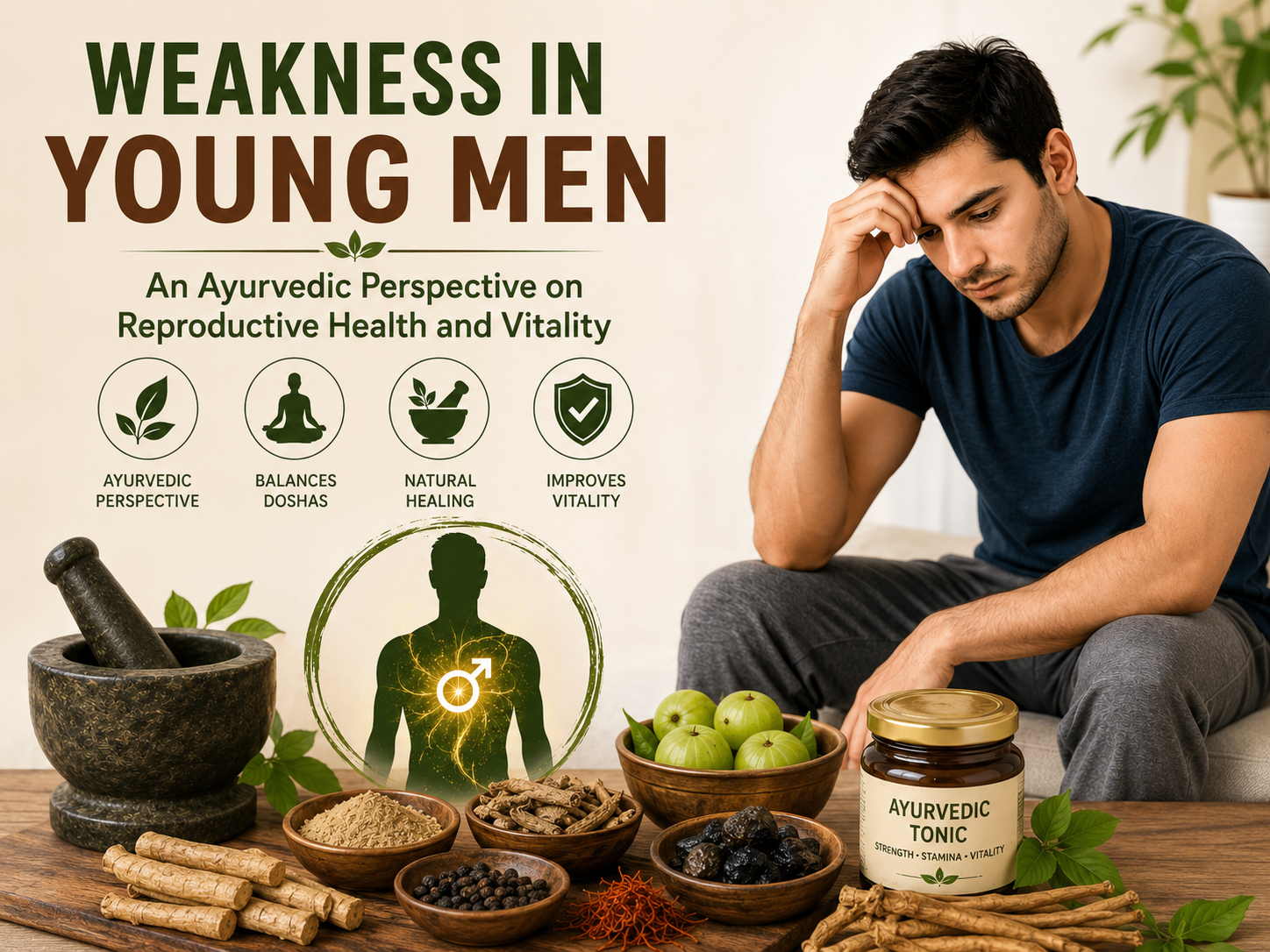
In recent years, there has been a noticeable increase in the number of young people reporting physical weakness along with mental fatigue. Many also experience low confidence and reduced overall vitality.
According to Ayurveda, one contributing factor may be excessive exposure to sexually explicit content, which has become more accessible through smartphones. Traditional Ayurvedic texts suggest that such habits, along with other lifestyle factors, may affect Shukra Dhatu (reproductive tissue).
Ayurveda describes Shukra Dhatu as the body’s most refined and valuable tissue. It is considered the final tissue formed through a gradual transformation of nutrients obtained from food.
According to Ayurvedic theory, food is first converted into Rasa (nutritive fluid). It then successively transforms into Rakta (blood), Mamsa (muscle), Meda (fat), Asthi (bone), Majja (bone marrow), and finally Shukra Dhatu.
Because this process takes time, Ayurveda regards reproductive tissue as especially important for maintaining strength, vitality, and overall health.
Traditional Ayurvedic beliefs suggest that excessive masturbation, frequent sexual activity, poor dietary habits, nocturnal emissions, and chronic mental stress may gradually weaken this tissue. This may be associated with physical weakness, reduced energy levels, and lower self-confidence.
Lifestyle Habits to Avoid
Ayurveda recommends avoiding habits that may negatively affect physical and mental well-being, including:
- Viewing sexually explicit books or content.
- Smoking, including bidis and cigarettes.
- Alcohol and other intoxicating substances.
- Excessive tea consumption.
- Oversleeping.
- Very spicy or heavily seasoned foods.
Adopting healthier lifestyle habits is considered an important step toward restoring balance.
Ayurvedic Remedy 1: Ashwagandha with Cow Ghee
One traditional preparation uses finely powdered Ashwagandha (Withania somnifera) mixed with an equal quantity of pure cow ghee.
The mixture is stored in a clean container, and traditionally 2–3 grams are taken twice daily with lukewarm milk.
According to Ayurveda, Ashwagandha is classified as a rejuvenating herb (Rasayana) and is traditionally used to support strength, stamina, vitality, and overall well-being.
Ayurvedic Remedy 2: Roasted Black Gram with Milk
Another traditional remedy involves roasting peeled black gram (urad dal) in ghee and then cooking it in approximately one kilogram of milk until the mixture is reduced to one-quarter of its original volume.
In Ayurvedic practice, this preparation is believed to promote:
- Physical strength
- Stamina
- Healthy weight gain
- Reproductive vitality
A Balanced Medical Perspective
Although these remedies have been used in traditional Ayurvedic practice for generations, scientific evidence supporting all of these claims is limited.
Persistent weakness, low libido, fatigue, erectile dysfunction, infertility, or changes in semen quality can result from many underlying conditions, including nutritional deficiencies, hormonal imbalances, thyroid disorders, chronic illnesses, stress, anxiety, depression, poor sleep, or certain medications.
Anyone experiencing ongoing symptoms should consult a qualified healthcare professional for proper diagnosis and treatment.
Disclaimer: This information is based on traditional Ayurvedic concepts and is intended for educational purposes only. It should not replace professional medical advice, diagnosis, or treatment. Always consult a qualified Ayurvedic practitioner or medical doctor before using herbal remedies or making significant changes to your healthcare routine.